Childhood myopia is accelerating worldwide — and Guanacaste is no exception. Learn what's driving it, what the risks are, and what parents can do at Ojos Del Mar in Tamarindo.
Myopia in children is getting worse — here's what Guanacaste parents need to know
If your child has been squinting at the whiteboard, sitting closer to the TV, or coming home with headaches after school, you may already be noticing the signs. Myopia — commonly called nearsightedness — is one of the fastest-growing vision conditions in children worldwide, and the rate of progression is accelerating.
This isn't a distant public health statistic. It's showing up in our exam chairs in Tamarindo every week.
What myopia actually is
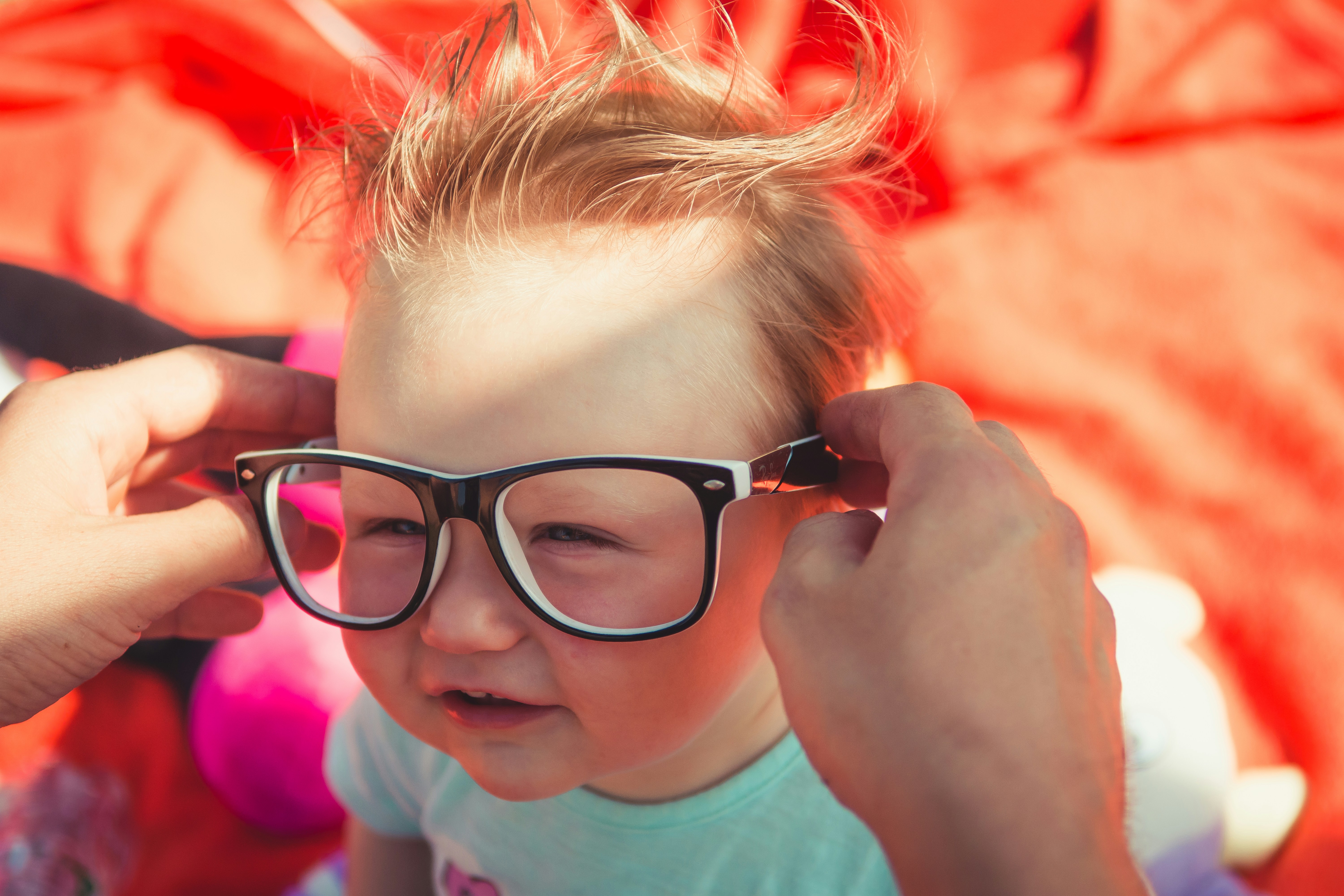
Myopia happens when the eye grows slightly too long from front to back. Light entering the eye focuses in front of the retina instead of directly on it, making distant objects blurry while near objects remain clear. It typically emerges during school years and worsens through adolescence as the eye continues to grow.
A prescription that gets stronger each year isn't just a lens problem — it's a sign the eye is elongating, and that elongation carries long-term consequences. High myopia is associated with significantly elevated lifetime risk of retinal detachment, glaucoma, cataracts, and macular degeneration. These are serious, vision-threatening conditions, and the higher the final prescription, the greater the exposure.
Why it's getting worse — in Guanacaste and globally
The global myopia rate has nearly doubled in the past three decades, and researchers point to two consistent drivers: more near work (reading, screens, close focus) and less time outdoors. Natural daylight plays a measurable protective role in eye development — children who spend more time outside have demonstrably lower rates of myopia progression.
In Guanacaste, the picture is complicated. Kids spend a lot of time outdoors, which is protective. But increased screen time — particularly post-pandemic — and intense academic near-work have offset much of that advantage. We're seeing prescription changes in children that would have been unusual a decade ago.
The signs to watch for
Children rarely report blurry vision — they assume everyone sees the way they do. Watch for:
- Squinting at the TV, whiteboard, or anything at a distance
- Sitting unusually close to screens
- Complaints of headaches, especially after school
- Losing interest in sports or activities involving distance
- Rubbing eyes frequently
- A teacher mentioning difficulty seeing the board
What you can do
The first step is a comprehensive eye exam to get a baseline prescription and confirm what's happening. From there, options depend on the degree of myopia and how quickly it's changing.
Standard glasses or contacts correct the blur but do nothing to slow the progression. There are now evidence-based myopia control treatments — including orthokeratology (Ortho-K) and specialty contact lenses — that have been shown in clinical trials to meaningfully slow the rate at which myopia worsens.
The earlier these treatments begin, the more of the progression curve you can interrupt. A child who starts myopia control at age 8 has a very different outcome trajectory than one who starts at 14. If you're interested in learning more about Ortho-K, check out our blog post, or chat with one of our eye professionals on WhatsApp now.
We see children at Ojos Del Mar
Our clinic in Tamarindo offers comprehensive pediatric eye exams, corneal topography mapping, and specialty myopia control services — including Ortho-K. If your child's prescription has been changing, or if you haven't had their eyes examined recently, book an appointment or message us on WhatsApp to ask whether your child is a candidate for myopia management.