The expat's guide to UV eye damage in the tropics — and why standard sunglasses aren't enough
Living in Guanacaste means extreme UV exposure year-round. Learn how UV damages your eyes over time, why cheap sunglasses can be worse than none, and what to look for in a protective lens.
The expat's guide to UV eye damage in the tropics — and why standard sunglasses aren't enough
Most people understand that UV damages skin. The same radiation damages eyes — and the mechanism is cumulative, which means years of living at a low latitude without proper protection add up in ways that become visible only later.
Guanacaste is one of the highest UV-exposure environments in the world for sustained residence. Understanding what you're actually managing here changes how you think about eye protection.
UV at tropical latitudes
The UV index in Tamarindo regularly reaches 11–12 on clear dry-season days — classified as extreme. For context, a UV index of 3 is considered moderate in most northern cities; 11 is more than three times that intensity. The angle of the sun at low latitudes means UV hits more directly, year-round, without the seasonal reduction of temperate climates.
UV radiation is present even on overcast days — clouds scatter but don't block it. Early morning and late afternoon hours, which many people assume are safe, still carry significant UV loads in equatorial regions.
What UV does to the eye over time
The damage is real and well-documented:
- Cataracts — UV is the primary environmental driver of cataract development. UV exposure accelerates lens clouding, moving the likely surgical timeline significantly earlier in people with high lifetime exposure.
- Macular degeneration — cumulative UV exposure contributes to degeneration of the macula, the central region of the retina responsible for sharp vision. Age-related macular degeneration is the leading cause of vision loss in adults over 50.
- Pterygium — the fleshy growth that extends across the cornea is directly driven by UV. It's endemic in surf communities and high-UV environments. We see it frequently in Guanacaste residents.
- Photokeratitis — the eye equivalent of sunburn. Acute UV overexposure (common after a day on the water without glasses) causes intense pain, redness, and temporary vision changes. It resolves, but the damage accumulates.
Why cheap sunglasses can make things worse
This is counterintuitive but important. A dark-tinted lens with no UV coating causes the pupil to dilate — the eye's natural response to reduced light. A dilated pupil admits more UV than a normal-sized pupil under bright light. The result is more UV reaching the retina than if you'd worn no sunglasses at all.
Any sunglasses you buy should explicitly state UV400 protection. This is not the same as polarized, not the same as dark tint, and not guaranteed by price. A $15 lens with UV400 is safer than a $200 lens without it.
What to look for
- UV400 certification — blocks 100% of UVA and UVB up to 400nm
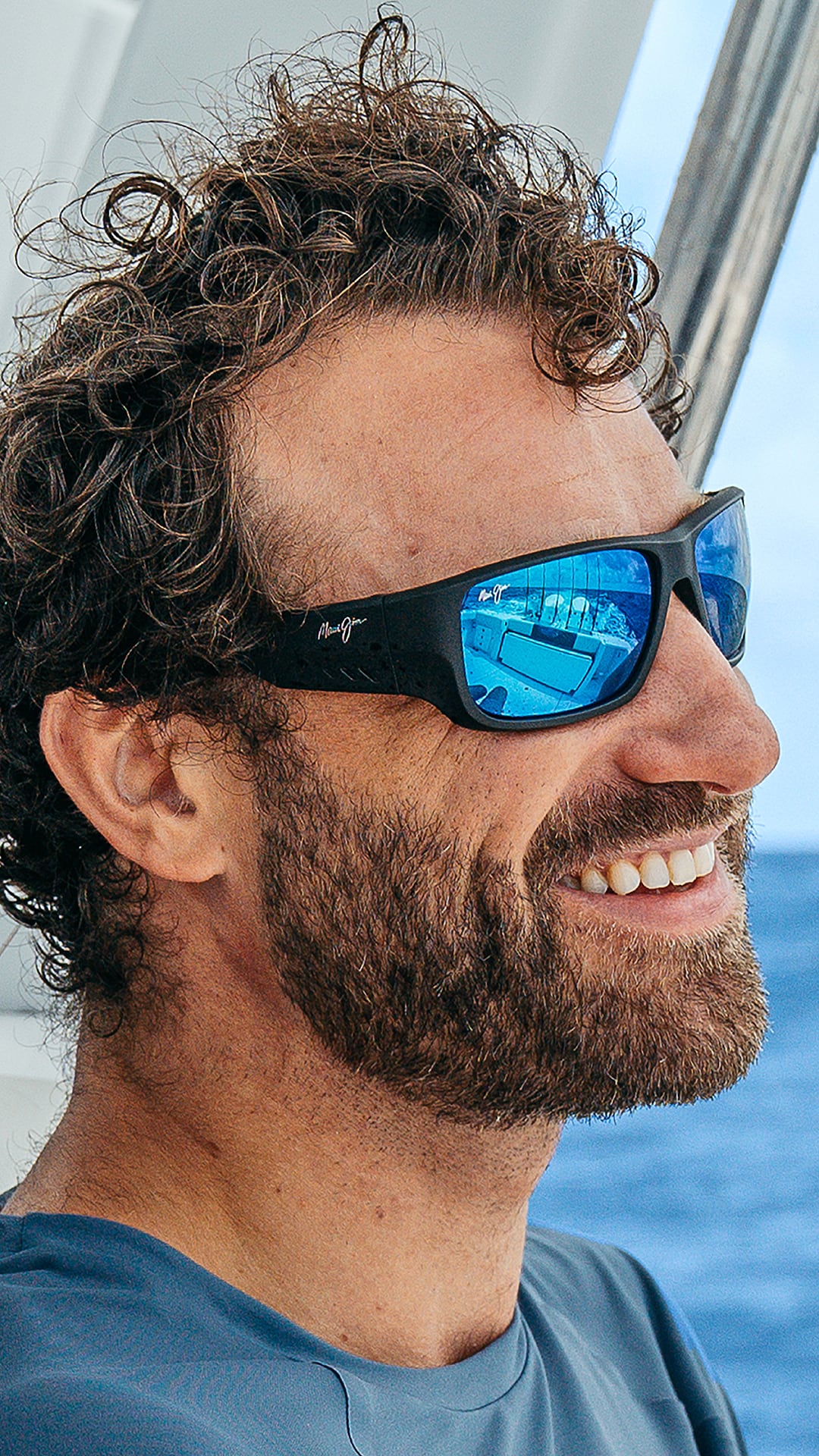
- Wraparound or close-fitting frames — peripheral UV enters the eye around the lens
- Polarization — reduces surface glare and eye fatigue, particularly on the water
- Lens material that holds coatings — polycarbonate and Trivex are good choices
Our eyewear gallery carries UV400-certified frames specifically selected for the Guanacaste environment. If you're due for an exam or want to assess your current sun protection, book an appointment or message us on WhatsApp.