Why your contact lenses feel uncomfortable in Tamarindo — and what to do about it
If your contact lenses feel uncomfortable in Tamarindo, the local environment is likely a major factor. Ojos Del Mar explains the dry eye–contact lens connection and what to do about it.
Why your contact lenses feel uncomfortable in Tamarindo — and what to do about it
If you wear soft contact lenses and they've started to feel worse in Tamarindo than they did back home — drier, more irritating, harder to tolerate by midday — you're not imagining it. The environment here creates specific conditions that standard contact lens wear isn't designed for.
Why contacts and dry eye interact
Soft contact lenses absorb moisture from the tear film — the thin fluid layer that keeps your eye lubricated and your vision clear. Throughout the day, a contact lens sitting on your eye is constantly competing with your eye for that moisture. In a comfortable environment with healthy tear production, this is manageable.
Add any factor that reduces tear production or increases evaporation — air conditioning, wind, ceiling fans, sun exposure, long days on the water — and that balance tips quickly. The lens dries out, the eye surface dries out, and the result is that gritty, burning, hazy-vision feeling that characterizes dry eye with contacts.
The Tamarindo-specific factors
Guanacaste has a few conditions that compound this:
- High UV exposure triggers low-grade inflammation on the eye surface that reduces tear stability
- Strong offshore winds increase tear evaporation significantly
- Air conditioning — in vehicles, restaurants, and offices — is extremely drying
- Saltwater exposure irritates the conjunctiva and disrupts the tear film
- The dry season (November–April) drops ambient humidity dramatically
If you're spending a lot of time surfing, sailing, or outdoors generally, you're dealing with most of these simultaneously.
What actually helps
Lubricating eye drops compatible with contact lenses can provide meaningful relief during the day. Not all drops are safe for use with contacts — preservative-free formulations are the ones to use, and we can recommend specific products that work well here.
If drops aren't sufficient, a lens change often is. Daily disposable lenses reduce the protein and deposit buildup that makes lenses increasingly uncomfortable by end of day. Some extended-wear lens materials also retain moisture more effectively than standard hydrogel lenses.
For patients with significant dry eye, specialty lenses — including scleral lenses — can eliminate the problem entirely by vaulting over the cornea and maintaining a fluid reservoir between the lens and eye surface throughout the day.
If your contacts haven't felt right and you've been tolerating it, book an appointment or message us on WhatsApp. There's usually a good solution — it's rarely just something to put up with.
When it's more than dry eye
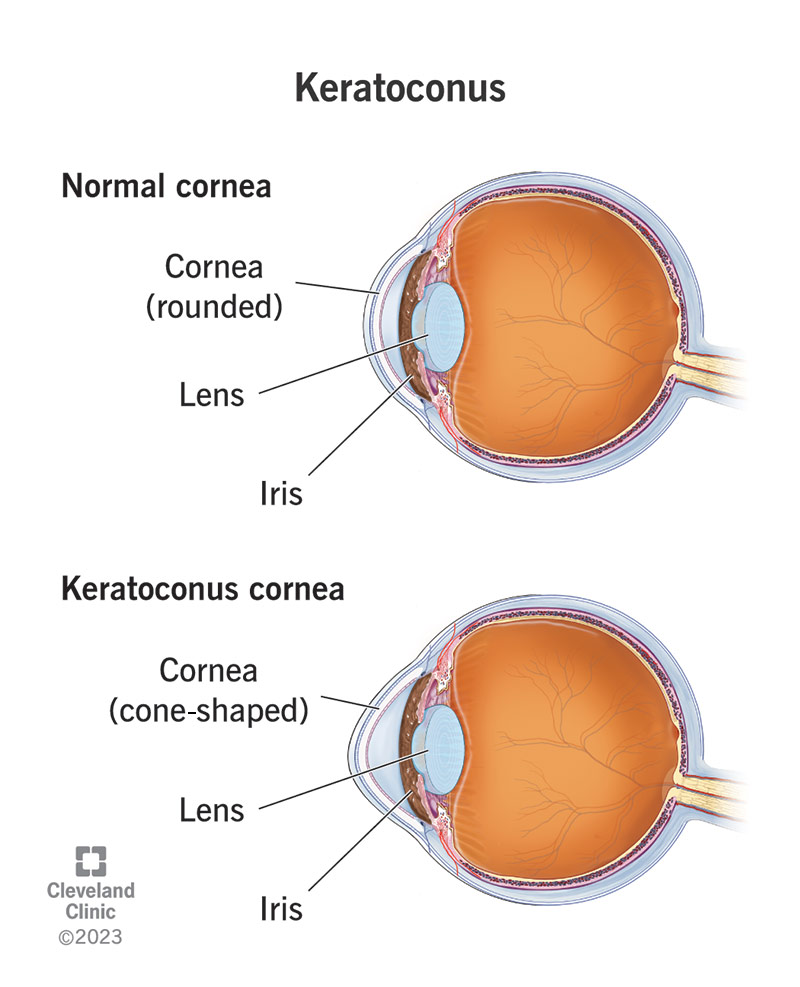
Persistent discomfort with contacts can also be a sign of blepharitis (inflammation of the eyelid margins), meibomian gland dysfunction, or early keratoconus. A comprehensive exam can distinguish between these, because the treatment for each is different.
Ready to get started?
Book a dry eye or contact lens consult | Message us on WhatsApp